06
Sep 26
Sep 26
ইসলামী বিশ্ববিদ্যালয় সবসময় সব ধর্মের সম্মান, অসাম্প্রদায়িক চেতনা এবং ধর্মীয় মূল্যবোধের প্রতি শ্রদ্ধাশীল : ভাইস চ্যান্সেলর
VIEW
01
Sep 26
Sep 26
ইসলামিক ফাউন্ডেশনের নতুন বোর্ড অব গভর্নরস গঠন, পদাধিকার বলে রয়েছেন ইবি ভাইস চ্যান্সেলর
VIEW
26
Aug 26
Aug 26
যথাযোগ্য ধর্মীয় মর্যাদায় নানা আয়োজনে ইসলামী বিশ্ববিদ্যালয়ে পবিত্র ঈদে মিলাদুন্নবী (সা.) উদযাপন
VIEW
23
Aug 26
Aug 26
ইউজিসি আয়োজিত উপাচার্যদের নীতিনির্ধারণী সংলাপের সমাপনী দিনেও ইবি উপাচার্যের অংশগ্রহণ, বিকেলে যোগ দেবেন শিক্ষামন্ত্রী
VIEW
21
Aug 26
Aug 26
উচ্চশিক্ষার ভবিষ্যৎ রূপান্তরে ইউজিসি আয়োজিত উপাচার্যদের নীতিনির্ধারণী সংলাপে ইবি উপাচার্যের অংশগ্রহণ
VIEWIslamic University explores Chinese language education, academic cooperation
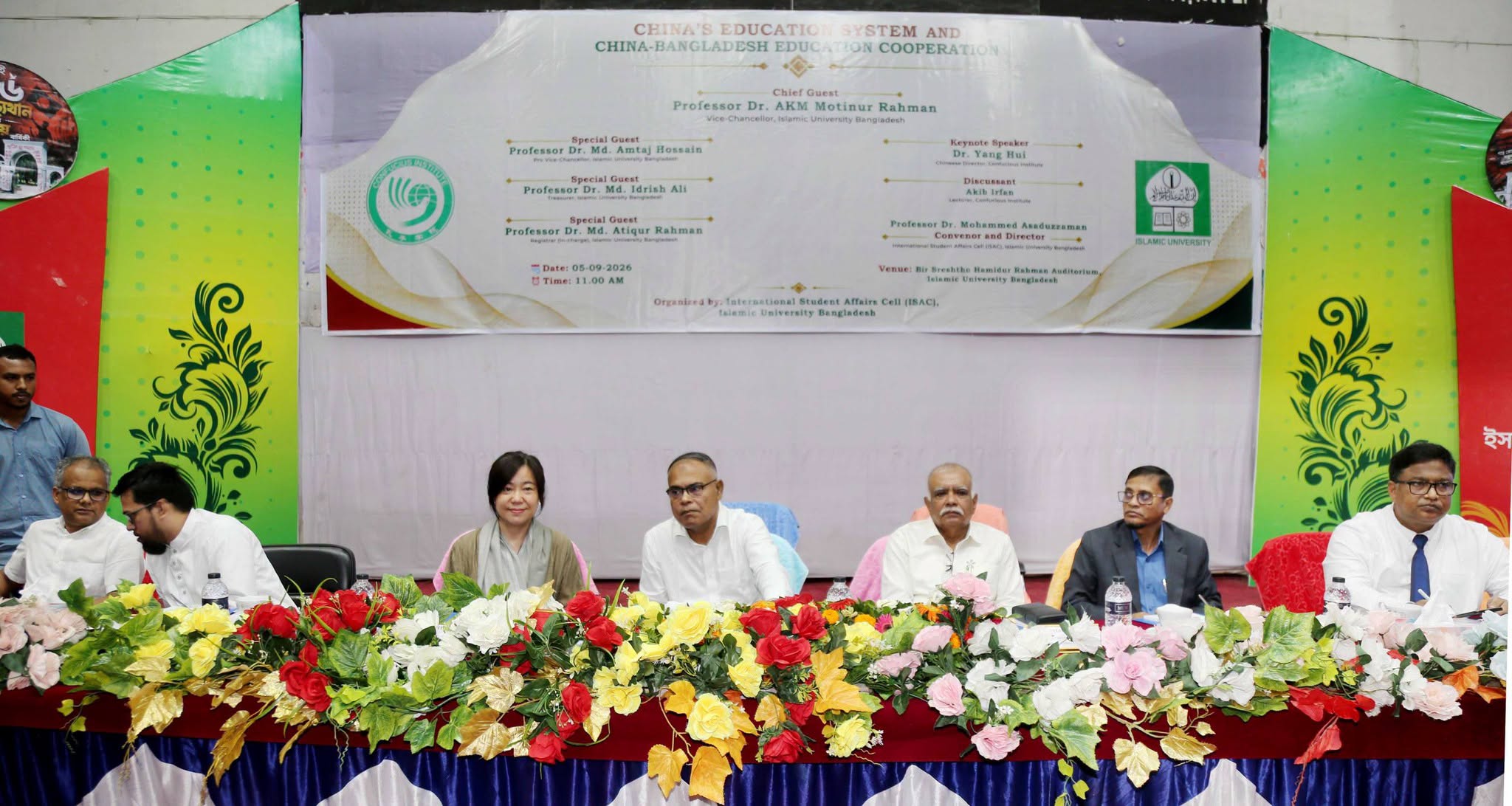
A seminar focusing on China’s education system and the prospects for expanding educational cooperation between Bangladesh and China was held at Islamic University (IU) on September 5. The seminar was organised by the International Student Affairs Cell (ISAC) of Islamic University at the Bir Shrestho Hamidur Rahman Auditorium. The programme brought together university authorities, academics and representatives associated with Chinese language and educational initiatives to discuss China’s education system, the growing importance of Chinese language education in Bangladesh, and potential areas of academic, vocational, technological and cultural cooperation between the two countries. Vice-Chancellor of Islamic University Professor Dr AKM Motinur Rahman attended the programme as the chief guest. Pro-Vice-Chancellor Professor Dr Md Amjat Hossain, Treasurer Professor Dr Md Idrish Ali and Registrar (Acting) Professor Dr Md Atiqur Rahman were present as special guests.
Dr Yang Hui, Chinese Director of the Confucius Institute, delivered the keynote speech on China’s education system and the prospects of strengthening educational cooperation between Bangladesh and China. Akib Irfan, lecturer at the Confucius Institute, took part in the programme as the discussant, while Professor Dr Mohammed Asaduzzaman, convenor and director of ISAC, coordinated the seminar. In her keynote presentation, Dr Yang Hui provided an overview of China’s education system, which includes preschool, compulsory, secondary and higher education, along with special and continuing education. She particularly highlighted China’s nine-year free and compulsory education system and discussed the broader structure through which the country provides educational opportunities at different stages of life. Dr Yang also spoke about the prospects of reviving Chinese language education at Islamic University. The Chinese language programme at IU, which was suspended during the COVID-19 pandemic, is expected to resume under renewed cooperation between the university and the Confucius Institute.
The proposed initiative is expected to create new opportunities for IU students to learn Chinese and strengthen academic and cultural links between the university and Chinese educational institutions. Highlighting recent initiatives to expand Chinese language education in Bangladesh, Dr Yang referred to cooperation between the education ministries of Bangladesh and China and plans to introduce Chinese language education at selected schools and universities. She also stressed the importance of developing local Chinese-language teachers through teacher-training programmes, saying that building a pool of qualified local instructors would be important for the long-term expansion and sustainability of Chinese language education in Bangladesh. According to Dr Yang, educational cooperation between Bangladesh and China should not remain limited to language learning alone. She said the scope of collaboration could be expanded to include vocational education, higher education, digital education and cultural exchange. She also proposed the introduction of “Chinese Plus” programmes, combining Chinese language education with business and vocational skills in accordance with the needs of Bangladesh’s labour market. Such programmes, she suggested, could enable learners to acquire language skills alongside professional and practical competencies, potentially broadening opportunities in education and employment. Dr Yang further emphasised the need for greater two-way cultural exchange between the two countries. She noted that an increasing number of Chinese students are learning Bangla in China, reflecting growing interest in strengthening linguistic and cultural understanding between the people of Bangladesh and China.
Speaking at the seminar, Vice-Chancellor Professor Dr AKM Motinur Rahman expressed gratitude to Dr Yang Hui for travelling from Dhaka to support Islamic University’s initiative to introduce Chinese as its third language under the proposed Modern Language Institute. He described the seminar and the proposed Chinese language programme as a significant milestone in the academic journey of the university and said the initiative could lay the foundation for long-term cooperation between Islamic University and the Confucius Institute. “Language is not only a means of communication; it is also a legacy of culture,” the vice-chancellor said, stressing the importance of learning foreign languages in an era increasingly defined by global connectivity. He said the Chinese language was becoming increasingly important in the global context, particularly in view of China’s growing influence in business, education, technology and the global economy. Referring to China’s growing influence in world affairs, Professor Motinur Rahman said, “I think China is going to be the next hegemonic state in world politics.” The vice-chancellor said the proposed cooperation with the Confucius Institute could initially lead to the introduction of a three-month basic Chinese language course for students of Islamic University.
The programme could subsequently be expanded into courses of 10 months or one year, depending on future requirements and the development of the proposed initiative, he added. Professor Motinur Rahman also said the university hoped to receive support from native Chinese language teachers through the Confucius Institute. Such cooperation could help provide students with direct access to qualified instructors and strengthen the quality of Chinese language education at the university. In the longer term, he said, Islamic University aims to establish a Chinese Studies Department under the proposed Modern Language Institute. Under the proposed arrangement, Islamic University would provide classrooms, office space and other necessary logistical facilities, while the Confucius Institute would support the programme through instructional content and teachers. The proposed collaboration is expected to open a new avenue for Chinese language education at Islamic University while also creating opportunities for broader academic and educational cooperation. With discussions focusing not only on language education but also on vocational training, higher education, digital learning and cultural exchange, the seminar highlighted the potential for a wider framework of Bangladesh-China educational engagement. The initiative to resume Chinese language education and introduce it under the proposed Modern Language Institute could also provide IU students with opportunities to develop foreign-language and professional skills in an increasingly interconnected global environment.
*****
office of the information, Publication and public relations
Edited By: Dr. Amanur Aman